 how-to
How to Properly Burn Soy Candles: A Complete Guide
Table of Contents
- How to Burn a Candle for the First Time (and Every Time After)
- How to Trim a Candle Wick for a Cleaner, Longer Burn
- Soy Candle Burn Time: How Long Should You Burn at Once?
- How to Prevent Candle Tunneling and Uneven Burning
- Container Diameter, Wick Type, and Why Your Soy Candle Burns the Way It Does
- Troubleshooting Soy Candle Problems by Symptom
- How to Properly Burn Soy Candles: Safety and End-of-Life Guidance
- Conclusion: A Simple Routine for Better Soy Candle Performance
- Frequently Asked Questions
Last Updated: October 14, 2026
How to Burn a Candle for the First Time (and Every Time After)
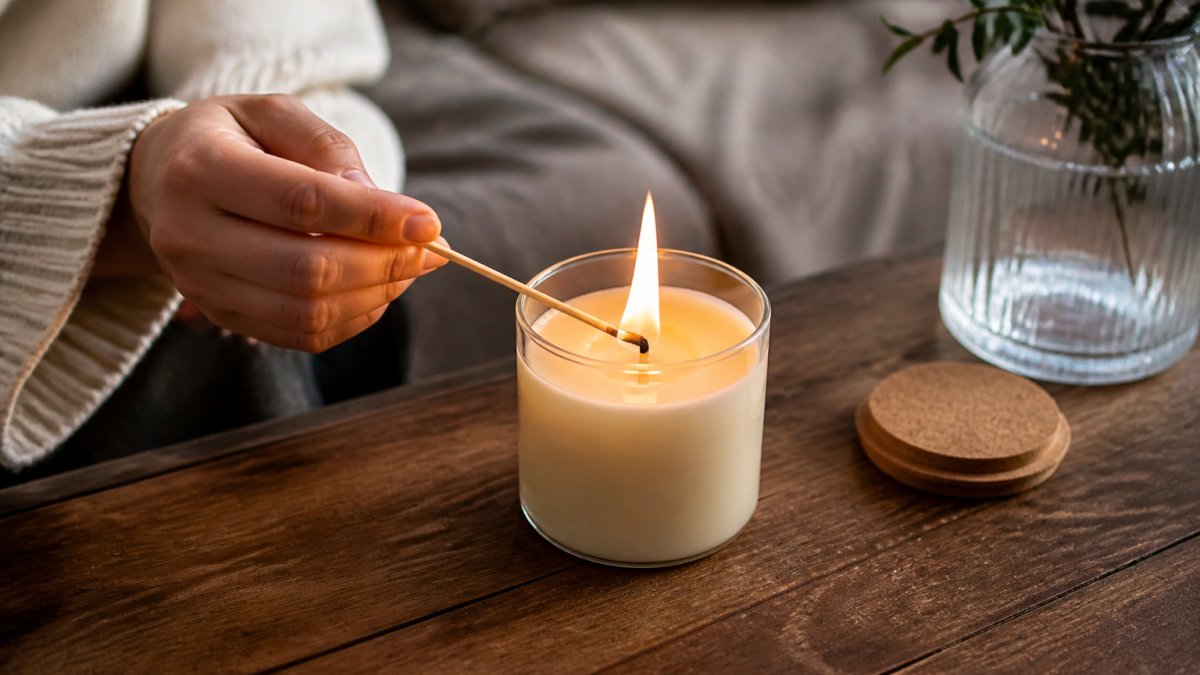
Learning how to properly burn soy candles starts with one rule: the first burn sets the tone for every burn that follows.
Here is the short version: trim the wick, burn long enough to melt the whole top layer, and keep each session under four hours.
Soy candle care is the practice of managing wick length, burn time, and melt pool so a soy wax candle burns evenly, smells strong, and lasts as long as possible.
That definition matters because soy wax behaves differently from paraffin. It melts at a lower temperature and holds fragrance differently, which changes how you should treat it.
- First burn: 2-3 hours, until the melted wax reaches the edge of the container
- Every burn after: trim to 1/4 inch, then light
- Never burn longer than 4 hours at a time
How to Trim a Candle Wick for a Cleaner, Longer Burn
How to trim a candle wick comes down to one number: 1/4 inch. That length gives you a steady flame, a clean melt pool, and far less soot.
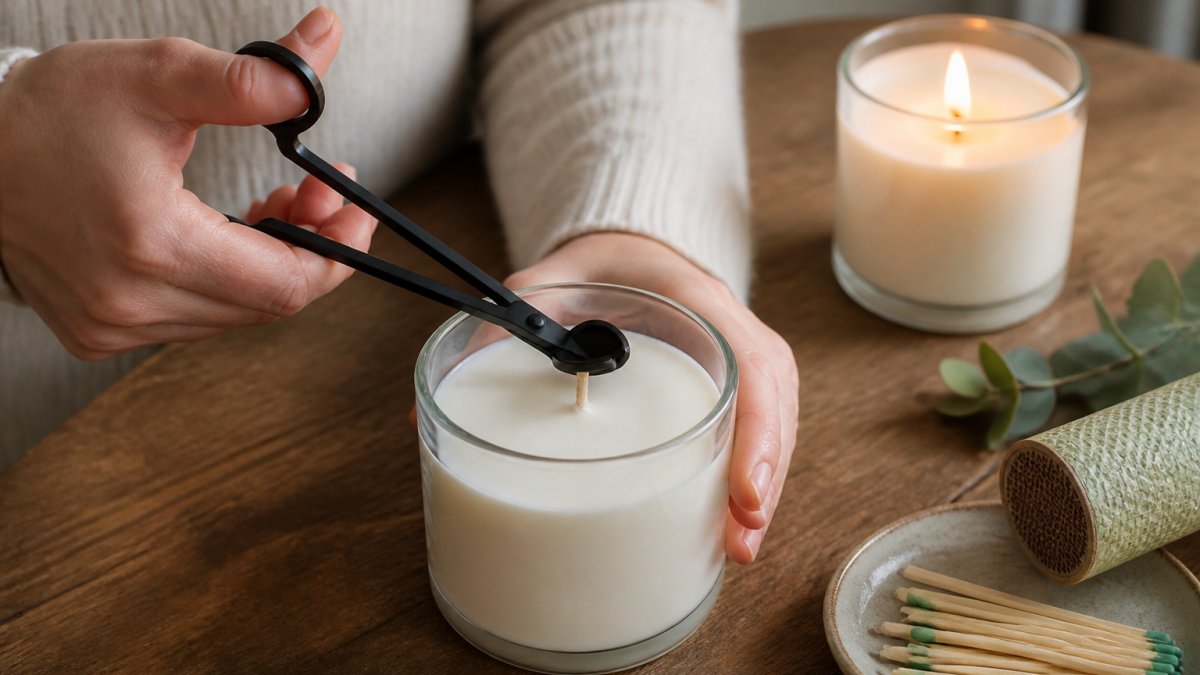
Trim before every single burn, not just when the wick looks long. Here is the routine:
- Let the candle cool completely first.
- Hold the wick straight and snip it to 1/4 inch with a wick trimmer or sharp scissors.
- Remove the trimmed piece so it doesn't catch fire.
- Light the wick at its base and let the flame settle.
A long or curled wick is the root cause of most soy candle problems. It feeds too much wax to the flame, creating a tall, flickering fire, black smoke, and a mushroom-shaped tip.
What most guides miss is the timing. Trimming a warm wick smears wax and frays the fibers. Always trim cold.
Soy Candle Burn Time: How Long Should You Burn at Once?
The National Candle Association's candle safety guidance recommends keeping any burn session to a maximum of four hours, then letting the candle cool for at least two hours before relighting.
Why the window exists
Soy wax has a lower melt point than paraffin, so it reaches a full melt pool faster but holds heat longer in the container. Two things happen at once during a burn:
- The flame melts wax outward from the wick until the pool reaches the container wall.
- The fragrance oils suspended in that top layer evaporate into the room, which is what you actually smell.
Burn too briefly and the pool never reaches the wall, so the outer ring stays solid and tunnels.
Match the session to the container, not just the clock
A wide, three-wick jar can pool in under an hour; a narrow, single-wick tin may need two hours or more.
| Container width | Typical time to full melt pool | Suggested session |
|---|---|---|
| Narrow (2-3 in) | 45-90 min | 1.5-2 hours |
| Standard (3-4 in) | 1.5-2.5 hours | 2-3 hours |
| Wide (4+ in, multi-wick) | 45-90 min | 2-3 hours |
These are starting points, not rules. Wax blend, fragrance load, wick type, and room temperature all shift the timing, a high-fragrance soy-coconut blend pools faster than straight soy.
Realistic expectations
The "burn two hours minimum" rule is a useful default, not a universal law.
A common mistake is lighting a candle for 20 minutes to freshen a room. For a quick boost, use a room spray and save the candle for a proper session.
How to Prevent Candle Tunneling and Uneven Burning
How to prevent candle tunneling comes down to heat and time. Tunneling happens when the flame melts only the center of the wax, leaving a ring of solid wax that never catches up. The fix is a full melt pool on every burn, melted wax should reach the container wall before you blow the candle out.
Other ways to stop uneven burning:
- Trim the wick to 1/4 inch before lighting
- Burn on a level, heat-safe surface away from drafts
- Keep the candle out of air conditioning vents and open windows
- Let the candle cool fully between sessions
- Never burn a candle that already has a deep tunnel without a fix
If your candle has already tunneled, you can sometimes rescue it: wrap aluminum foil around the top with a small center opening, then burn for two hours. The foil traps heat so the edge wax melts down to the same level.
Container Diameter, Wick Type, and Why Your Soy Candle Burns the Way It Does
Wick size and container diameter decide how a soy candle burns before you ever strike a match.
Here is the part most people never hear: if a candle tunnels even with perfect wick trimming, the wick was likely sized wrong for the container. No amount of care fixes a mismatched wick.
How the two factors interact
The flame must deliver enough heat to melt wax to the container wall without making the pool too deep or overheating the wax.
- Wide containers need a larger wick, or multiple wicks, to spread heat across the full surface. A single small wick in a wide jar will always tunnel.
- Narrow containers need a smaller wick so the flame doesn't overheat the wax and drive off fragrance.
- Cotton wicks suit most soy blends and give a steady, predictable flame.
- Wood wicks crackle and burn wider, which can help in wide containers but often needs a different size than the cotton equivalent.
- Wax blends with coconut oil or olive oil added melt at lower temperatures and often need a slightly smaller wick than straight soy.
Diagnose your own candle
You can usually tell whether a candle was wicked correctly within the first two burns:
| What you see | What it means |
|---|---|
| Full melt pool reaches the wall in 1-2 hours, steady flame | Wick is correctly sized |
| Tunnels even after 3+ hour burns, small flame | Wick too small for the container |
| Smokes, flickers tall, wax overheats, strong hot throw then fades | Wick too large |
| One side melts faster than the other | Wick is off-center, or the candle is in a draft |
| Pool forms but wick drowns repeatedly | Wick too small, or fragrance load is high |
What this means for makers
Wick sizing is not a formula you can copy from a chart.
When you shop for soy candles, look for brands that talk about wick sizing and wax blends.
Troubleshooting Soy Candle Problems by Symptom
Most soy candle problems have a clear cause and a simple fix. Match your symptom to the list below before you give up on a candle.
| Symptom | Likely Cause | Fix |
|---|---|---|
| Tunneling | Wick too small or short burns | Burn 2-3 hours, try the foil method |
| Black smoke and soot | Wick too long or drafty spot | Trim to 1/4 inch, move from drafts |
| Weak scent throw | Burn session too short | Burn until full melt pool forms |
| Wick mushrooming | Burn over 4 hours | Trim wick, shorten sessions |
| Flame too tall | Wick untrimmed | Trim cold to 1/4 inch |
| Candle won't stay lit | Wick drowned in wax | Pour off excess wax, retrim |
Soot and smoke are the easiest problems to fix. They almost always trace back to an untrimmed wick or a draft. Trim the wick, move the candle, and the flame settles.
Weak scent throw is the most misunderstood. Many people blame the candle when the real issue is a short burn that never released the fragrance oils in the top layer of wax.
Wick mushrooming is normal in small amounts. A little curl at the tip is fine. A large black mushroom means your sessions are running too long.
How to Properly Burn Soy Candles: Safety and End-of-Life Guidance
Knowing how to properly burn soy candles also means knowing when to stop. A candle is done when about 1/2 inch of wax remains, or when the wick can no longer stand upright.
Stop burning when:
- Only 1/2 inch of wax is left
- The wick falls over or drowns repeatedly
- The container is cracked, chipped, or very hot to the touch
- The wax has pulled away from the glass
Safety basics that apply to every burn:
- Always place the candle on a heat-safe surface
- Keep candles away from curtains, paper, and pets
- Never leave a burning candle unattended
- Keep candles out of reach of children
- Never use water to put out a candle
The U.S. Consumer Product Safety Commission candle safety information notes that most candle fires start when something flammable sits too close to the flame. Clearing a safe zone around your candle is the single best prevention step.
For end-of-life candles, don't toss the jar. Once the wax is gone, clean it with warm soapy water and reuse it for small items. Many soy candle jars make good holders for makeup brushes, cotton balls, or tea lights.
Conclusion: A Simple Routine for Better Soy Candle Performance
Good soy candle performance comes down to a short, repeatable routine: trim the wick to 1/4 inch, burn for two to four hours, and let the melt pool reach the edge every time. Do that, and one candle delivers weeks of steady scent instead of a few disappointing burns.
If you want candles built for that routine, Escents of Hue hand-pours uniquely scented soy candles and room sprays. Our massage candles bring the same care to date nights and quiet evenings at home.
Get started with Escents of Hue and turn every burn into a small ritual worth repeating.
Frequently Asked Questions
How long should you burn a soy candle at a time?
For the first burn, let the candle stay lit until the melt pool reaches the edge of the container, usually 2 to 3 hours for a standard jar. After that, keep each session to 3 or 4 hours. Burning longer than 4 hours can cause the wick to mushroom, the wax to overheat, and the fragrance to fade. Always trim the wick to 1/4 inch before each lighting and never leave a burning soy candle unattended.
How do you stop a soy candle from tunneling?
Tunneling happens when the first burn is too short, so the melt pool never reaches the container edge. Prevent it by burning long enough on the first session (2 to 3 hours for most jars) to create a full melt pool. If tunneling has already started, you can wrap aluminum foil around the top of the jar with a small opening and burn for an hour or two to help the wax melt evenly. Trim the wick to 1/4 inch before every burn to keep the flame steady.
How short should you trim a soy candle wick?
Trim your soy candle wick to about 1/4 inch before every burn. A wick that is too long produces a tall, flickering flame, excess soot, and wick mushrooming. A wick that is too short may drown in the wax and struggle to stay lit. Use a wick trimmer, nail clippers, or scissors, and always trim when the candle is cool and the wax is solid.
Is a soy candle safe to burn indoors?
Yes, soy candles are safe to burn indoors when you follow basic precautions. Place the candle on a heat-safe surface away from drafts, curtains, and pets. Keep the wick trimmed to 1/4 inch to reduce soot. Never burn a candle for more than 4 hours at a time, and stop burning when only 1/2 inch of wax remains at the bottom. Ventilate the room occasionally, especially if you are sensitive to fragrances.