 blog
blog
Best Soy Candles for Stress Relief: 2026 Picks
Table of Contents
- Why Soy Candles for Stress Relief Are Worth the Switch
- Quick Comparison: What to Look for in Calming Soy Candles
- Soy Candle Benefits: Cleaner Burn, Longer Life, Better Value
- Calming Candle Scents That Actually Support Relaxation
- Lavender Soy Candles: The Most Researched Scent for Stress
- Massage Candles for Relaxation: What They Are and How to Use Them
- How to Match Scent Intensity to Room Size and Occasion
- Conclusion
- Frequently Asked Questions
Last Updated: October 16, 2026
Why Soy Candles for Stress Relief Are Worth the Switch
If you have ever struck a match after a long day and felt your shoulders drop before the flame even caught, you understand the pull of a good candle. But the wax itself matters as much as the scent. Best soy candles for stress relief are not just a nicer version of the same product; they burn differently, smell cleaner, and fit more naturally into a calming routine. At Escents of Hue, we hand-pour soy candles in small batches, so we think about this distinction constantly.
The core difference is wax chemistry. Soy wax is a vegetable wax made from soybean oil, and it burns cooler than paraffin, the petroleum-based wax in most mass-market candles. That lower burn temperature produces less soot and releases fragrance more gently.
Quick Comparison: What to Look for in Calming Soy Candles
Before you buy, narrow your choices with a simple set of criteria. The table below summarizes what separates a genuinely calming soy candle from one that just smells nice in the store.
| What to Check | Why It Matters | What to Look For |
|---|---|---|
| Wax type | Affects burn cleanliness and duration | 100% soy or a soy-dominant blend |
| Wick material | Influences soot and burn evenness | Cotton or lead-free wick |
| Fragrance source | Ties to sensitivity and air quality | Phthalate-free, IFRA-approved fragrance |
| Scent family | Shapes the calming effect you want | Lavender, eucalyptus, vanilla, floral |
| Burn time | Determines value per hour of use | Longer, even burn with no tunneling |
| Jar size | Must match your room | Smaller jars for bedrooms, larger for living areas |
A common mistake is choosing by scent alone. The wax, wick, and fragrance source decide whether that scent supports relaxation or overwhelms the room.
Soy Candle Benefits: Cleaner Burn, Longer Life, Better Value
Soy candles offer three practical advantages for daily use: a cleaner burn, a longer burn time, and better value per hour. None are marketing fluff, each follows from how soy wax behaves and can be checked against a number on the label.
- Cleaner burn: Soy wax has a lower melting point than paraffin, so the pool stays cooler and the wick draws less fuel per minute. A cooler, smaller flame produces less soot and smoke, leaving less blackening on a jar rim than paraffin candles of the same size.
- Longer life: Because the wax melts at a lower temperature, it is consumed more slowly. A well-made soy candle burns roughly 5 to 7 hours per ounce of wax, versus 4 to 6 hours for paraffin.
- Better value: Value is cost per hour of use, not sticker price. Divide price by estimated burn hours to compare.
- Renewable source: Soy is a plant-based, renewable material, which appeals to buyers who care about where their home fragrance comes from.
The trade-offs are real. Soy wax is softer than paraffin, so it can struggle to throw scent in a large, open room and performs better in a smaller, enclosed space.
Ingredient transparency matters more than the word "soy" alone. Wax type does not establish a candle's emissions or safety; fragrance load, fragrance source, and wick composition matter just as much. Look for a full fragrance disclosure or a clear statement that the fragrance is phthalate-free and IFRA-compliant, and confirm the wick is cotton or lead-free. A 100% soy candle with a mystery fragrance and wick is not automatically the cleaner choice.
Calming Candle Scents That Actually Support Relaxation
Calming candle scents fall into a few recognizable families, and knowing them helps you choose with intention rather than impulse: lavender, eucalyptus, vanilla, and soft floral or botanical notes.
- Lavender: The most widely recognized calming note, often used in bedtime routines.
- Eucalyptus: A crisp, clean botanical note that many people associate with spa settings.
- Vanilla: Warm and grounding, good for cozy evening use.
- Floral and botanical notes: Chamomile, jasmine, and similar notes for a softer, more delicate calm.
Here is where honesty matters. Scent and stress relief are linked mainly through the sense of smell and personal association, not through a guaranteed medical effect. A scent you find soothing will calm you more than a "scientifically calming" scent you dislike. Cleveland Clinic overview of aromatherapy notes that aromatherapy is generally used as a complementary practice, and results vary from person to person.
Lavender Soy Candles: The Most Researched Scent for Stress
Lavender soy candles combine the most familiar calming scent with a slower-burning wax, which is why they sit at the center of most relaxation routines. Pairing lavender with soy wax means the scent releases gradually instead of all at once.
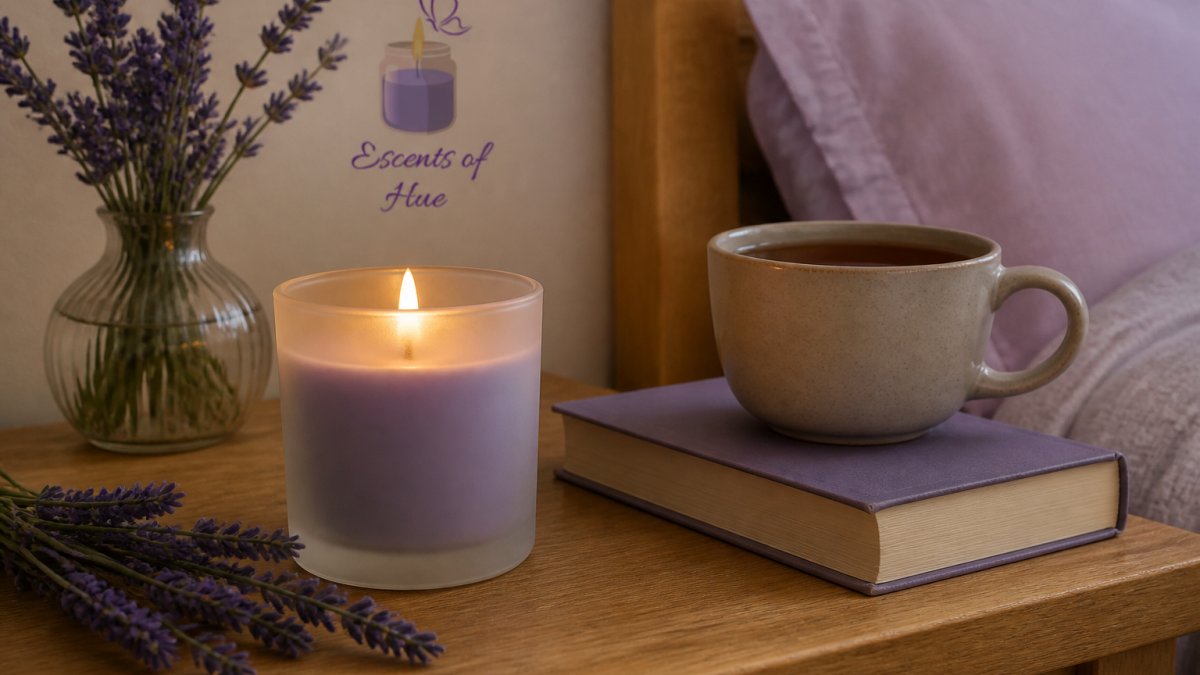
What most guides miss is that lavender is a broad category, not a single smell. French lavender, English lavender, and lavender blended with vanilla or eucalyptus all read differently. For a true bedtime scent, choose a lavender-forward candle with a soft base note; for daytime, a lavender-eucalyptus blend works better.
Massage Candles for Relaxation: What They Are and How to Use Them
Massage candles for relaxation are made with a low-temperature, skin-safe wax and oil blend that melts into a warm massage oil. They are not the same as a standard scented candle and should never be improvised from one.
The key is the melt temperature. A massage candle is formulated to pool into oil that is warm but not hot enough to burn skin. Here is how to use one safely:
- Trim the wick and light the candle.
- Let it burn until a small pool of oil forms, usually several minutes.
- Blow out the flame and let the pool cool for a moment.
- Pour a small amount into your palm, never directly onto skin.
- Test the temperature on your own wrist before applying.
- Use the warm oil for a slow massage.
Our massage candles are built for exactly this purpose, blending a skin-safe oil with a calming scent so the ritual works as both ambiance and touch.
How to Match Scent Intensity to Room Size and Occasion
Matching scent intensity to your space is the step most buyers skip, and the fastest way to end up disappointed. A candle that fills a living room will overpower a small bedroom, and one sized for a nightstand will disappear in an open-plan kitchen.
Three factors set hot throw:
- Fragrance load, the percentage of fragrance oil in the wax. Lighter loads read as subtle; heavier loads read as strong and can be overwhelming in a small room.
- Wax and wick, soy wax throws more gently than paraffin, and an undersized wick can starve the pool and mute the scent. A properly sized wick keeps the melt pool even across the jar.
- Room volume and airflow, scent concentration drops as room volume rises and as air moves. A ceiling fan, an open window, or an HVAC vent near the candle will pull fragrance away from where you are sitting.
Use this guide to match intensity to the space:
| Room | Size Feel | Scent Intensity | Best Occasion |
|---|---|---|---|
| Bedroom / nightstand | Small, enclosed | Light to medium | Bedtime routine, reading |
| Bathroom | Small, humid | Medium | Bath, self-care |
| Home office | Small to medium | Medium | Focus, daytime calm |
| Living room | Medium to large | Medium to strong | Evening wind-down |
| Open-plan space | Large | Strong, or use two | Gatherings, date nights |
If unsure, start subtle. It is easy to add a second candle or move one closer; it is much harder to clear an over-scented room. For a small bedroom, one candle with a moderate fragrance load is usually enough.
Fragrance sensitivity deserves its own plan. Some people react to scented products with headaches, sneezing, or irritated eyes, and the reaction is often tied to the fragrance rather than the wax. American Lung Association guidance on indoor air quality recommends limiting scented products when someone in the home has asthma or fragrance sensitivity. A few practical habits help:
- Ventilate the room by cracking a window or running a fan on low while the candle burns.
- Keep candles out of reach of children and pets, and never leave a burning candle unattended.
- Choose phthalate-free, IFRA-compliant fragrance, and prefer lighter fragrance loads for shared spaces.
- Keep an unscented or lightly scented soy candle on hand for days when scent is unwelcome.
- If a scent triggers a reaction, stop using it and air out the room rather than pushing through.
Pets and children change the calculus too. Birds and small pets are especially sensitive to airborne fragrances, and a curious cat or dog can knock over a jar.
Conclusion
Choosing well comes down to more than a pretty label. Match the wax, wick, and scent to your room and routine, and a soy candle becomes a genuine part of how you unwind rather than a decorative extra. That is the standard we hold at Escents of Hue, where every candle is hand-poured in small batches with phthalate-free, IFRA-approved fragrance and a cotton wick. Explore our uniquely scented soy candles, our skin-safe massage candles, and our room sprays to build a calming ritual that fits your space. Get started with Escents of Hue and turn any room into a place that helps you breathe easier.
Frequently Asked Questions
What are the benefits of using soy candles?
Soy candles burn cleaner than paraffin, producing less soot and releasing fewer volatile organic compounds into indoor air. They also burn at a lower temperature, which means a longer burn time per ounce of wax. A well-made soy candle with a cotton wick can last 30 to 50 hours depending on size and burn practices. For stress relief, the combination of a cleaner burn and a calming scent creates a more pleasant environment for unwinding.
Which candle scents are best for stress relief?
Lavender is the most studied scent for relaxation, but it is not the only option. Eucalyptus, vanilla, chamomile, and cedarwood all appear in aromatherapy research for their soothing properties. The best scent for you depends on personal preference and association. A scent you find pleasant will do more for your mood than one you dislike, even if it ranks higher in studies. Try small sizes before committing to a full jar.
Are soy candles better than paraffin candles?
Soy wax burns cleaner and slower than paraffin, which means less soot and a longer-lasting candle. Paraffin is a petroleum byproduct and can release compounds like toluene and benzene when burned, though levels are generally low in well-made candles. Soy wax is biodegradable and comes from a renewable source. The trade-off is that soy can have a weaker scent throw in some formulations.
How do you choose a soy candle for relaxation?
Start by checking the wax blend, wick type, and fragrance source. Look for 100% soy or soy-coconut blends, cotton or lead-free wicks, and phthalate-free fragrances. Match the scent intensity to your room: a single-wick candle works for a bedroom, while a larger space needs a double or triple wick. If you are sensitive to synthetic fragrances, choose candles made with essential oils or IFRA-approved fragrance oils at lower concentrations. Always trim the wick to a quarter inch before each burn.